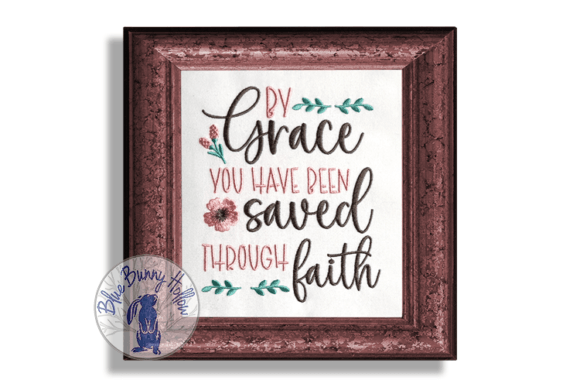
By Grace You Have Been Saved: A Designer’s Review
As a designer who has spent countless hours digitizing patterns and testing them on everything from delicate silk to heavy canvas, I approach every new machine embroidery design with a mix of curiosity and caution. We have all been there: you download a beautiful digital embroidery file, load it onto your machine, and hold your breath as the needle hits the fabric. Will the letters collapse? Will the density pull the fabric out of shape? Or will it look crisp, professional, and worthy of the price tag you plan to attach to the finished item?
I recently evaluated By Grace You Have Been Saved, a faith-themed piece that promises elegance and spiritual resonance. My goal was not just to admire the aesthetics but to determine how this design performs in real-world scenarios for Etsy sellers, boutique owners, and hobbyists alike. Here is my practical assessment of how this design holds up under the needle.
First Impressions: Mood and Visual Personality
The first thing that strikes you about By Grace You Have Been Saved is its balanced composition. In the realm of Religion-based Embroidery, designs often swing too far in one direction: either overly ornate and dense, or so minimal they lack impact. This design finds a sweet spot. The typography suggests a modern serif or clean script blend, creating a mood that is both reverent and contemporary. It does not scream for attention; rather, it invites a closer look.
For a craft business owner, this visual personality is crucial. It fits seamlessly into the current trend of minimalist home decor and understated apparel. It feels less like a loud statement and more like a quiet affirmation. When I visualized this stitched out, I immediately thought of neutral tones—creams, soft grays, and muted earth tones—rather than high-contrast neon threads. The design’s strength lies in its clarity, making it an excellent candidate for projects where readability and emotional connection are paramount.
Real-World Application: From Tote Bags to Sweatshirts
To truly test the viability of any embroidery project, you must imagine it on actual products. I mentally placed By Grace You Have Been Saved on several common items to gauge its versatility.
Custom Apparel and Sweatshirts: This is perhaps the strongest use case. Imagine this design centered on the chest of a high-quality, heavyweight cotton sweatshirt. The text length is substantial enough to create a focal point without overwhelming the garment. For a small shop product, this appeals directly to customers looking for meaningful, wearable faith expressions. The key here is placement. On a crewneck, ensuring the bottom line of text does not distort over the curve of the bust is essential. I recommend hooping with a strong cut-away stabilizer to prevent puckering, especially if the stitch density is high in the lettering.
Tote Bag Design: Canvas tote bags are staples for handmade product sellers. This design would look stunning on a natural unbleached canvas. The texture of the canvas provides a nice contrast to smooth satin stitch or clean fill stitch work. However, because canvas is thick, you must ensure your machine can handle the height. If the design uses fine details, a slightly larger needle and robust thread are necessary to maintain definition.
Nursery and Baby Items: While the message is universal, the elegance of the design makes it suitable for baby embroidery projects, such as christening gowns or nursery wall hangings. Here, scale is everything. You may need to resize the embroidery file to fit smaller hoops, but be cautious. Shrinking text too much can cause letters to merge, ruining legibility. Always check the minimum recommended size provided by the digitizer before scaling down.
Technical Considerations and Stitch Performance
When evaluating a text-heavy design, the technical execution is where projects often fail. Here are the specific areas I scrutinized for By Grace You Have Been Saved.
- Stitch Density and Fabric Choice: Text designs require precise density. If the fill stitch is too dense, it will perforate thin fabrics like jersey knits or lightweight linen. If it is too sparse, the fabric background will show through, looking amateurish. I advise testing this on scrap fabric similar to your final product. If you are stitching on a stretchy fabric, a stabilizer is non-negotiable.
- Small Details and Corners: Sharp corners in lettering can bunch up if the digitizing does not include proper underlay stitches. Inspect the preview file closely. Look for clean transitions between letters. If the design includes any decorative flourishes, ensure they are not so thin that they break easily during washing.
- Thread Colors and Contrast: This design relies on legibility. Using low-contrast thread colors, such as light gray on white, might look subtle in photos but disappear in person. For a personalized gift or commercial item, high contrast is safer. However, if you aim for a tonal, textured look, ensure the lighting in your printable mockup accurately represents the final result.
- Curved Surfaces: Applying this to caps or hats requires careful hooping. The curvature of a cap can distort long lines of text. If you plan to use this for headwear, consider breaking the design into two lines or adjusting the arch setting in your embroidery software to compensate for the dome shape.
Commercial Viability for Etsy Sellers and Makers
For those running a craft business, the question is not just "Does it look good?" but "Will it sell?" and "Is it efficient?"
By Grace You Have Been Saved has strong commercial potential. Faith-based items remain a consistent seller on platforms like Etsy. The design’s elegance allows it to transcend seasonal trends, making it a evergreen asset for your design assets library. It works well for holiday gifts, particularly around Easter and Christmas, but its message is timeless enough for year-round sales.
However, professionalism is key. A sloppy stitch-out can damage your brand reputation. Before listing this as a custom apparel option or an embroidered patch, produce a sample. Photograph it in natural light. Show the texture of the stitches. Customers buy with their eyes, and a clear, crisp image of the finished product builds trust. Use this design in your printable mockup previews to show versatility, but always disclose that actual thread colors may vary slightly from screen to fabric.
Practical Designer Notes for Best Results
To ensure success with this machine embroidery design, follow these practical steps:
- Test on Scrap First: Never run a new design directly on your final garment. Use a similar fabric scrap to check tension and density.
- Check Licensing: Before selling items made with this digital embroidery file, confirm the license terms. Some designers allow unlimited commercial use, while others require an extended license for mass production.
- Inspect File Formats: Ensure you have the correct format for your machine (PES, DST, JEF, etc.). If the provider does not list your format, contact them before purchasing.
- Consider Stabilizer Type: For woven fabrics like cotton or linen, a tear-away stabilizer may suffice. For knits or stretchy materials, use a cut-away stabilizer to prevent distortion over time.
- Mockup in Black and White: Convert your design preview to black and white. This helps you see if the contrast and detail hold up without the distraction of color. If it looks muddy in grayscale, it may need adjustment.
In conclusion, By Grace You Have Been Saved is a thoughtful, well-composed addition to any faith-based embroidery collection. It offers versatility for various commercial embroidery applications, from tote bag design to sweatshirt embroidery. By paying attention to technical details like stabilizer choice and stitch density, you can transform this digital file into a high-value handmade product that resonates with customers. Treat it with the care it deserves, and it will serve as a reliable staple in your creative toolkit.